dynamicmedia9@gmail.com
Tampilkan postingan dengan label Reviews. Tampilkan semua postingan

Selasa, 09 Mei 2017

'Guardians of the Galaxy: Vol. 2' review

*Light SPOILERS will follow. I'll try to avoid anything explicit, but it's hard to talk about what makes Vol. 2 so great without talking spoilers.*

It's easy to forget that when Guardians of the Galaxy hit theaters back in 2014, nobody really thought it would be a hit. Pretty much everyone was skeptical of Marvel's intergalactic superhero team-up film, myself included. After the success of The Avengers, the idea of the studio making a movie about a talking raccoon and a giant tree fighting in space was insane- it seemed like a film that would be far too ridiculous for mainstream audiences. But after a tremendous marketing campaign and early word that the film was delightfully entertaining, Guardians of the Galaxy turned into the biggest breakout hit of the summer. Even adjusted for inflation, it grossed more than both Thor movies, the first two installment in the Captain America franchise, and Iron Man 2, a feat that I don't think can be overstated. It also introduced audiences (and even some comic book fans) to characters that have since become icons, legendary heroes that hold as much weight as anybody in the Earth-bound Avengers.


The Guardians of the Galaxy are established superstars at this point, and the surprise factor that turned the 2014 film into a runaway smash is gone. With popularity comes the weight of expectations, and few films in 2017 were as hotly anticipated as Guardians of the Galaxy: Vol. 2. Marvel sequels have a tendency to fall into the trap of being over-stuffed, over-crowded, and generally pointless, existing merely to set up a myriad of future films. I think most people would agree that Marvel doesn't have the best track record with sequels, save for the espionage thrills of The Winter Soldier and the blockbuster mayhem of Age of Ultron (even this will likely be a controversial statement). Writer/director James Gunn had a monumental task on his hands, and he could have taken this sequel in so many directions, including some that could have gone very, very wrong.

Instead, Gunn chose to take a different path, one that is essential to the success of this magnificent sequel. While maintaining everything that fans loved about the first one- the visual energy, the chemistry between the characters, the kick-ass soundtrack- Gunn takes the Guardians in a more personal direction that establishes this franchise as Marvel's most emotionally resonant. He expands the world so that the film almost feels like a sugar rush of cosmic eye candy, but he grounds the stakes in a way that really hits home. He doesn't feel the need to connect the Guardians to the rest of the Marvel universe or set up 10,000 different sequels- he knows that this story and these characters can stand on their own. The result is one of the studio's best, a pure blast of fun that works as pretty much everything you could ever want from a summer blockbuster. As someone who walked in with a certain degree of skepticism, Gunn made fall in love with this film. And much to the shock of this fan, it's even better than the original.


Picking up some time after the events of the original film, Guardians of the Galaxy: Vol. 2 reunites us with Star-Lord/Peter Quill (Chris Pratt), Gamora (Zoe Saldana), Drax (Dave Bautista), Rocket (Bradley Cooper), and Baby Groot (Vin Diesel), the lovable criminals who saved the galaxy and became instant legends. As our story begins, the Guardians have been hired by the Sovereign, a race of uptight alien beings, to kill a giant space creature in exchange for Nebula (Karen Gillan), Gamora's evil sister and the daughter of mad space titan Thanos. Everything goes surprisingly well, until Rocket decides it's a good idea to steal some of the batteries that the Sovereign hold as their most precious asset. High Priestess Ayesha (Elizabeth Debicki) sends a fleet after the Guardians, resulting in a chase that sends their ship crashing into a nearby planet.

But somehow, it could have been much worse. At the last moment, the Guardians are saved by a mysterious man who managed to destroy thousands of Sovereign ships in one fell swoop. That man also lands on the planet, revealing himself to Ego (Kurt Russell), a god-like being and the father of Peter Quill. Leaving Rocket and Baby Groot to fix the ship, Peter, Drax, and Gamora travel with Ego and Manits (Pom Klementieff) to the celestial's planet. Meanwhile, Yondu (Michael Rooker) and the Ravagers are undergoing a crisis of their own. Yondu is shunned from the order by renowned Ravager Stakar Ogord (Sylvester Stallone), which prompts his colleagues to start a mutiny over his allegiance to Peter Quill. Led by Taserface (Chris Sullivan), the crew of vengeful Ravagers track down the Guardians and kidnap Rocket, Groot, and Yondu. While they face death on a Ravager vessel, Peter learns the secrets of his own origin, reuniting with the father he always wanted. But as a dark new threat is revealed, the Guardians will have to come together to save the galaxy once again.


As I watched the marketing campaign unfold for Guardians of the Galaxy: Vol. 2, my main concern was that amid all of the humor and comedic insanity, it seemed like the sequel was lacking in the story department. And as I watched Vol. 2, that concern remained for much of the runtime. The original film wasn't story-driven either, but Vol. 2 rides the wave of its laid-back vibe to the point that it begins to feel meandering. Thankfully, Gunn knows that he can only rely on the individual character threads and jokes for so long before bringing it all together, and he does so at exactly the right point. There's a scene towards the end of the second act that involves Nebula chasing down Gamora with a spaceship in a North by Northwest-style moment, and as it progressed, I thought "Okay, this story really needs to start going somewhere." Almost immediately, Gunn kicks the whole thing into high gear, uniting all of the different stories and creating a final act that is as visually dazzling as it is heartbreaking and beautifully emotional.

Gunn certainly relies on the interplay between the characters once again here, but he also improves on some of the flaws that stood out to me in the original film and in the Marvel Cinematic Universe as a whole. Despite being able to do almost everything else right in the realm of superhero movies, Marvel has consistently struggled with crafting good villains and using death in a meaningful way. While I can't say who ends up being the main antagonist is for fear of spoiling the surprise, just know that they're one of Marvel's best- Gunn has created the most fearsome and memorable Marvel baddie since Tom Hiddleston's Loki. And to make things even better, Vol. 2 becomes the first Marvel film to deal with death in a real, permanent way that has a profound, moving impact. For a franchise that relies so much on being funny and silly, the fact that Guardians: Vol. 2 is so emotionally frank and honest is a welcome surprise, firmly placing the Guardians as the heartfelt core of the Marvel universe.


Much will be made about the tear-jerking conclusion to Vol. 2, and deservedly so. Gunn really pulled off something magical here, and he deserves all the praise in the world. He never stretches to connect this film to other corners of the MCU, nor does he include story threads that feel like extraneous filler. The closest blockbuster comparison is last year's Star Trek Beyond, and this film has a faster, funnier vibe that makes it vastly more entertaining than its sci-fi counterpart. But as critical as Gunn is to the success of this movie, he also places quite a bit of importance on the characters and the actors who play them. That's no surprise considering what made the first film so successful, but the focus on character is still a welcome component. Gunn gives everyone a little something to do, and that makes the first two acts fly by before it all collides together for one hell of a finale.

The obvious centerpiece of the story is Chris Pratt's Peter Quill, the roguish hero who is forced to deal with more personal issues in this installment, mainly involving his relationship with his father. Pratt pulls off the critical moments quite well, and I love the way that Star Lord's narrative progresses in this film. The central storyline is complimented by the terrific performances of Kurt Russell and Michael Rooker as Ego and Yondu, respectively, who provide a wonderful contrast that works excellently. Russell is clearly having a blast as the godlike Ego, while Rooker gets a chance to twist his villainous Ravager into a more sympathetic, fascinating character. Gunn touched on the idea of misfits with broken pasts banding together in the original film, and here, he takes a closer look at the idea of family and what that word really means. To say much more would be a spoiler, but I'll note that it applies both to Quill's relationship with his father and with the Guardians.


But even beyond the central character of Star Lord, each and every player in Guardians of the Galaxy: Vol. 2 gets a chance to shine. The relationship between Gamora and Nebula is explored in a new way, giving Gunn another chance to show the softer side of an antagonist from the original film. But in addition to the emotional beats that are so critical to Gunn's script, several supporting characters get an opportunity to perfectly utilize the trademark humor that made the original film such a smash hit. Dave Bautista is absolutely wonderful once again as Drax, delivering some of the best lines of the film and displaying excellent chemistry with Pom Klementieff, who stands out as one of the best new characters. Bradley Cooper is a blast as Rocket, with some of the funniest moments coming from the angry raccoon's interactions with Taserface, Chris Sullivan's villain who suffers from an acute lack of self-awareness. And of course, Baby Groot is the most wonderfully enjoyable character in the whole movie.

With all of the character work holding Vol. 2 together and standing as its essential key to success, it's even more impressive that the film is quite possibly the most visually incredible piece of entertainment that Marvel has ever created. Just like the villain issues and the lack of true stakes, Marvel always suffers from a visual staleness that permeates every one of their movies. Their best movies don't usually have much in the way of splashy colors or clever cinematography- even the original Guardians of the Galaxy suffered from the basic Marvel style. Here, James Gunn and the production design team go absolutely wild, crafting gorgeous setpieces and fully embracing the retro 80s vibe of this franchise. Vol. 2 is a joy to behold, an explosion of sci-fi madness that's so good it doesn't even feel like a Marvel movie. From the shimmering gold of the Sovereign world, to the snowy and metallic party universe that houses the Ravagers, to the beautiful landscapes of Ego's majestic planet, everything in this film exists as a unadulterated blast of visual stimulation.


And the soundtrack! How can I even talk about a Guardians film without mentioning the soundtrack? Gunn perfectly matches the visual power of this mega-budget hit with a mixtape of retro favorites that manages to miraculously work as well as it did in the original. The soundtrack kicks in almost immediately, with Baby Groot dancing to Electric Light Orchestra's classic "Mr. Blue Sky" during the joyous opening credits scene that re-establishes that perfect tone that made the original a sensation. Gunn follows that up with a collection of hits that immaculately underscore each and every scene, bringing an added sense of fun and pathos to the proceedings. Fleetwood Mac's "The Chain" is used expertly as the film's anthem, there's a sweet dance set to Sam Cooke's "Bring It On Home to Me," and "Come a Little Bit Closer" is incredibly placed during one of the film's most shocking bits of action. I'll be listening to Awesome Mix: Vol. 2 for the next several weeks- and I expect that anyone who watches this film will be doing the same.

Guardians of the Galaxy: Vol. 2 could have coasted on the success of the original and delivered something that was as disposable and forgettable as many of the Marvel sequels that have come before it. But thanks to the passion that James Gunn has for these characters and his relationship with the actors who portray them, Vol. 2 is one of Marvel's best films, a surprisingly superior sequel that takes everything we loved about the breakout hit and expands on that success in ways that logically serve the characters and the narrative. It's fun, it's action-packed, and it's hysterical from start to finish- it's the best possible way to start off the summer movie season. Vol. 2 upended my expectations at every single turn, which is something that rarely happens with these kinds of blockbusters. Superhero films don't get much more enjoyable or heartfelt than this- Guardians of the Galaxy: Vol. 2 is a blast of the highest order.

THE FINAL GRADE:  A                                                 (9/10)


Images: Marvel/IMDB
No comments

Senin, 01 Mei 2017

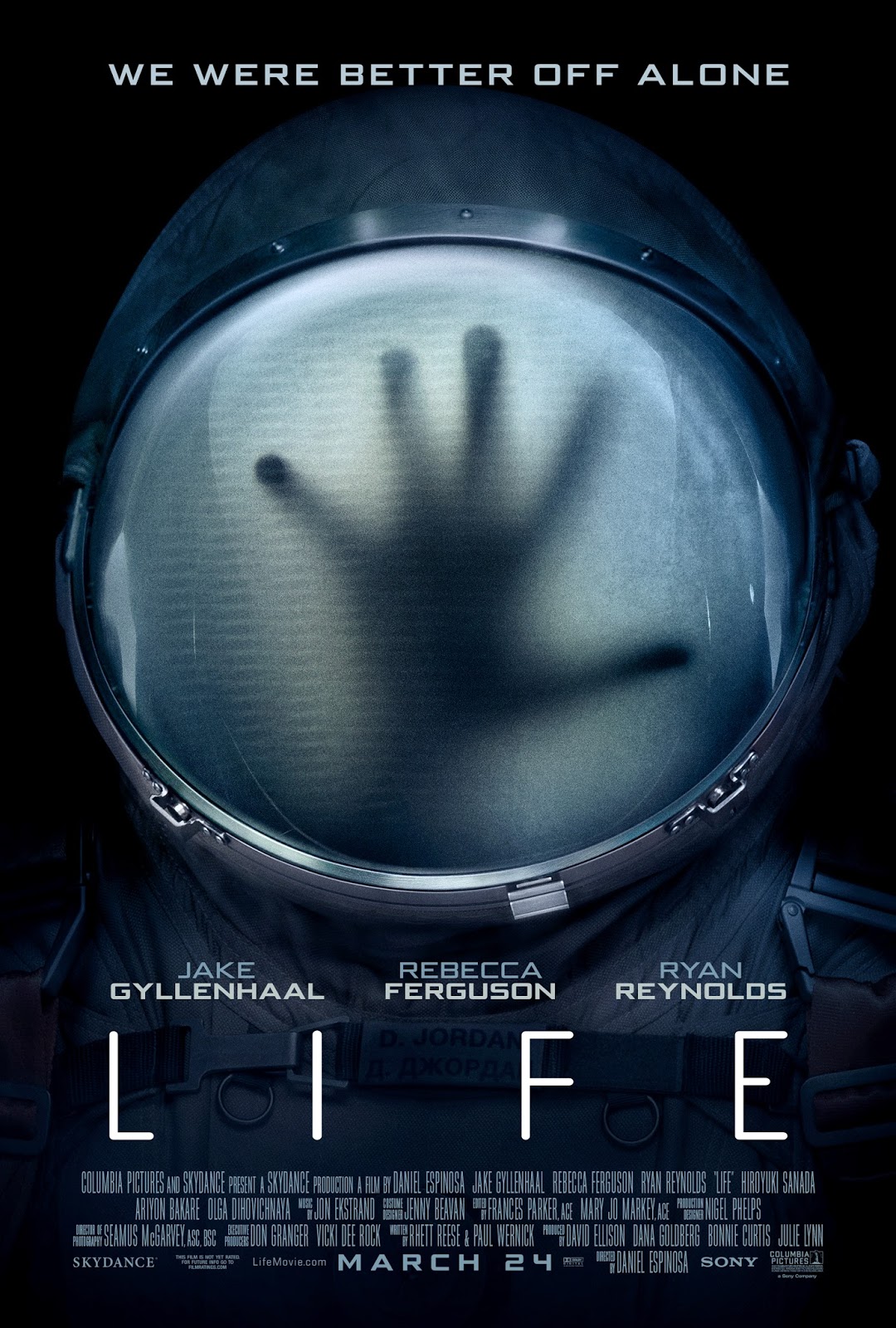
'Life' review

I'm usually not this late on seeing a movie. I tend to see films within the first two weeks of their release, and if I'm not able to see it during opening weekend or quickly after, I'll just skip it altogether. That seemed to be what would ultimately happen with Daniel Espinosa's Life, a sci-fi horror/thriller that boasts an A-list cast and a premise that has been described as Alien meets Gravity. The film debuted in theaters on March 24 and due to a college trip that weekend, I missed it, as well as several others like Power Rangers and Song to Song. I was never compelled to check out the latter two, but I started to hear things about Life that piqued my interest in a strange way. Critics weren't exactly kind to what they described as a generic thriller, but I heard from multiple people that the film went beyond being bland- it was almost aggressively idiotic. When one of my closest friends said that I simply had to watch this movie, I immediately put it on my must-see list.


But keep in mind- I wasn't hate-watching. I had a genuine interest in seeing Life at one point, and despite the warnings from my friends, I was still hoping that this would be good. After all, it's a space thriller with Ryan Reynolds and Jake Gyllenhaal- on paper, that sounds like a blast. But after seeing the film, it's safe to say that nobody was lying. Life is all kinds of bad, a pulpy sci-fi movie that quickly devolves into something that manages to be both profoundly silly and oddly self-serious. Here is a movie about quite possibly the dumbest group of scientists on the planet, individuals who seem to make the wrong choice at every turn. It features nearly no character development, no emotional investment, and not even a whole lot of context for what is even happening. It has a surprisingly effective start, but its failure to generate tension, intrigue, or suspense makes for a disappointing sci-fi adventure.

Life is the story of a group of astronauts on the International Space Station, none of whom are really all that interesting or engaging. There's Rory Adams (Ryan Reynolds), a roguish, charming scientist who is the heart and soul of the mission. There's David Jordan (Jake Gyllenhaal), the quiet, reserved type who likes the emptiness and solitude of space. In addition, we meet Miranda North (Rebecca Ferguson), Sho Murakami (Hiroyuki Sanada), Katerina Golovkina (Olga Dihovichnaya), and Dr. Hugh Derry (Ariyon Bakare), the slightly mad scientist who discovers a powerful alien life form. Oh yes, that's right, Life is a movie about aliens, and it doesn't take long for this space creature to start killing people. After an elementary school decides that Calvin is the best name to give the first documented extraterrestrial being in the history of civilization, the crew on the ISS begins performing more and more tests on the creature. Soon, Derry and the others realize that Calvin isn't a malevolent single cell organism, but a terrifying force of nature- all brain, all muscle. As the crew fights for their lives, they'll have to make a horrifying choice to prevent an indestructible creature from wiping out civilization as we know it.


Life is a weird movie, and I can't emphasize that enough. It seems to recognize its inherently ridiculous, pulpy nature at times, while also positioning itself as the grounded, serious alternative to popular sci-fi movies. Characters speak in elaborate tech lingo, spouting off scientific information that's meant to sound smart, but doesn't give us any real context on the story or characters. And for every clever filmmaking technique from director Daniel Espinosa, like the exceptionally cool opening tracking shot, there's something else that feels both overly familiar and ridiculous. What results is an endless series of dumb moments stuck in a tedious, "realistic" shell, one that never allows the film to take off in any meaningful way. What starts as promising quickly turns preposterous, and Life turns into the kind of schlocky nonsense that you would expect to find in the pre-summer months.

For me, it starts with the characters. Let's compare the crew of the ISS in Life to the men and women aboard the Nostromo in Alien, the clear inspiration for this film. In Alien, you know almost immediately who these characters are and what they're all about. Ripley is the no-nonsense tough woman, Brett and Parker are only in it for the money, Dallas is the cool and collected man in charge, and so on. In Life, we get none of that. Derry's paralysis is a confusing character motive that doesn't really play out, nor does Jordan's PTSD-driven misanthropy for the human race. Ryan Reynolds is basically playing Ryan Reynolds, Sanada and Dihovichnaya barely have characters at all, and Rebecca Ferguson's Miranda North is a confusing, cluttered mess. With such one-note, flat characters, it's pretty safe to say that you don't care about them when they start getting killed off. You don't need to have sympathy for every stock character in a sci-fi slasher movie, but there needs to be some kind of core to make it all worth it.


In addition, Espinosa seems to overlook suspense and terror in favor of grisly kills and elaborate effects, a mistake that pretty much dooms the movie. The design of the creature in Life is fairly laughable- it's a giant squid that kills people and moves really fast. Instead of playing with shadows and scares, Espinosa goes straight for the jugular, killing characters off in increasingly horrific ways. There's drowning, zero-G blood, and murder by squid, all with a poorly designed monster at the center of the action. But for all of the action and the running and the terror, there's rarely a hint of actual suspense or intrigue. There's no atmosphere, no underlying sense of dread and paranoia. Life would have been better off going the route of John Carpenter's The Thing, pitting our characters against each other, with nobody knowing exactly who to trust. Instead, it's the poor man's Alien- stock characters, mediocre kills, zero suspense.

In one of Life's action scenes, North and Jordan are being chased down a hallway by Calvin. As they dash through an escape point, Jordan shouts "No!" and slams a door in Calvin's face, hitting him and prompting a hilariously over-the-top sound effect.

I don't know why, but that feels like it sums up Life pretty well. It's a bad movie, plain and simple. It doesn't accomplish any of its goals, and while it might make you laugh a little bit in the process, I'm fairly certain that wasn't Espinosa's intention. Despite a terrific cast led by the reliable Reynolds and Gyllenhaal, Life is a sci-fi letdown that feels like an uninspired hodgepodge of much better films. In the hands of a better filmmaker and a better screenwriter, this could have gone differently. But in its current state, Life is an overblown misfire.

THE FINAL GRADE:  C                                              (5.5/10)


Images courtesy of Sony Pictures
No comments

'Sleight' review

It has been an incredibly long road to the big screen for J.D. Dillard's Sleight, which premiered at the 2016 Sundance Film Festival. Dillard's directorial debut immediately earned rave reviews and buzz at the fest, establishing the filmmaker as a talent to watch. He has a mysterious upcoming project with Jason Blum, and he's even being considered to direct a remake of The Fly. But until this weekend, nobody had been able to see the film that caught the eye of the major studios and put Dillard on the Hollywood watchlist. Thanks to WWE Studios and Blumhouse Tilt, Sleight is finally hitting theaters across the country, with an added marketing boost from J.J. Abrams and Dillard's friends at Bad Robot. What you'll find isn't a spectacular debut, but a very interesting one, a film that displays a highly original concept from a unique directorial voice. Boosted by a terrific sense of atmosphere and a tremendous lead performance from Jacob Latimore, Sleight is worth the watch, even if it never quite pulls off any feats of cinematic wizardry.


As a high school student, Bo (Latimore) was a promising young magician with a scholarship to a prestigious university. But when his mother suddenly passed away, everything changed. Bo was forced to become the sole guardian of Tina (Storm Reid), his younger sister and the only family member he has left. Bo turns to street magic for extra cash, but his real money is made as a drug dealer working for the charismatic and violent Angelo (Dule Hill). Bo hoped that drug dealing would be a short-term gig, but he quickly finds himself embroiled in a conflict that sees him become an integral part of Angelo's organization. Meanwhile, Bo also meets a beautiful girl named Holly (Seychelle Gabriel), who has some terrible family problems of her own. As the danger increases and Bo finds himself in an increasingly terrifying situation, he'll have to make a plan to escape with Tina and Holly, starting a new life away from the circumstances that threaten to destroy everything.

As shown on the poster, Sleight has been described by many as a kind of superhero origin story, and while there are some strange fantastical elements at play here, I don't know if that description really does the film justice. In reality, it's a much more grounded film, one that deals with themes of abuse, violence, and love. Dillard limits the superheroic action to the final moments of the film, and even that never comes off as absurd or ridiculous. Sleight deals in magic and mystery, but it's mainly a film about a kid thrust into a terrible situation to survive. Whether Dillard fully manages to balance the mystical and the practical is another issue that I think is still up for debate. But my basic point is that if you're looking for a superhero movie in traditional sense of the word, you're not gonna find it here. Sleight is a different beast altogether- and it's a better movie for it.


Dillard is great at atmosphere and character, two things that are surprisingly essential to the success of a genre film. He uses the L.A. setting of Sleight to great effect, highlighting the darkness of the city in a way that recalls films like Nightcrawler. There's a noir element to this film that really works, and there are some gritty moments that manage to disturb and shock. In addition, each and every character is clearly defined, driven by clear motivations that help the film come to life. Jacob Latimore has appeared in small roles in Collateral Beauty and The Maze Runner (with a part in this summer's Detroit), but if the Hollywood studios are watching, Sleight will be his breakout role. Latimore has the ability to be both confident and vulnerable, pulling off magic tricks with a slick charisma before reacting with wide-eyed terror as the dark forces of the underworld surround him. He has great chemistry with the entire cast, and he has a strong screen presence that overwhelms some of Dillard's directorial flaws.

In addition to Latimore's star performance, the supporting crew of Sleight is fairly impressive in their own right. Dule Hill's performance as the sociopathic villain is delectably evil, drifting between smooth likability and all-out nastiness with ease. Seychelle Gabriel is also a star in the making, bringing depth and pathos to what could be a typical girlfriend role. Latimore and Gabriel are believable as a couple, and their characters' love for each other is palpable. Sleight is a surprisingly character-driven movie, one that relies on the audience's connection to the flawed individuals at the center of the story. And with the strong turns from Latimore, Hill, and Gabriel, that direction stands as a true asset.


Unfortunately, Dillard's narrative is lacking at times, and his focus on characters doesn't always pan out. There's a moral ambiguity to the main story in Sleight that Dillard opts to never explore, which serves to the detriment of the final product. Bo is willing to do everything and anything to make life better for his sister- at what point does that make him an anti-hero? In addition, Sleight runs a relatively short 90 minutes but manages to feel much longer, saddled with a few twists and subplots that feel extraneous to the overall trajectory of the film. Dillard manages to give the story a simple, yet effective set of stakes, but the story runs out of gas towards the end. The balance between the two contrasting elements never quite pans out, and the conclusion isn't as satisfying as it should be.

The result is something entertaining, but generally less than memorable, an ambitiously original genre project that falls just short of B-movie greatness. Mainly, Sleight serves as a strong introduction to two individuals who could deliver brilliant work in the future- Jacob Latimore and J.D. Dillard. Latimore has talent for days, and if Dillard finds the right project, I have no doubt that he will absolutely knock it out of the park. If their careers pan out, Sleight will be looked back on as an underrated gem, a film that introduced us to two stars who made an impact on the industry. If not, it'll still work as a unique little genre movie that takes quite a few risks. Sleight is another imperfect film in a year that has been filled with them, but if the concept interests you, it's worth a look.

THE FINAL GRADE:  B-                                             (6.9/10)


No comments

Jumat, 21 April 2017

'Colossal' review

When you attend a major film festival, there's a good chance that you won't get the opportunity to see every movie that catches your interest. That's especially true when the festival in question is the Toronto International Film Festival, which historically features the most sprawling slate of films of any major cinematic showcase. At the 2016 festival I managed to see 13 films, including some of the best movies of the year and even Barry Jenkins' Moonlight, the eventual Best Picture winner at the Oscars. But even with a jam-packed weekend of movies, I wasn't able to even scratch the surface of the TIFF lineup, missing out on future Oscar favorites like La La Land and Lion, as well as arthouse genre flicks like Raw and Nacho Vigalando's Colossal. The latter is finally opening wide across the country courtesy of Neon Films, the new distribution chain started by Alamo Drafthouse founder Tim League that is clearly being designed to directly compete with A24.


Colossal is the type of film that thrives in a festival environment. It's weird, unique, and buzzy, a high-concept flick that is best experienced with no expectations and no pre-conceived notions. Going in, I basically knew that Colossal was going to be a wacky journey, something funny and strange that would go in some unexpected and hysterical directions. The result is a film that is decidedly more serious, a monster movie that deals as much with the concept of power and abuse as it does with the funny monster stuff. Vigalando has crafted something distinct and surreal, a singular adventure with themes and concepts that nobody has ever really explored before. And while I generally enjoyed this indescribable bit of insanity, there's something missing here that I can't quite put my finger on. Vigalondo's film is bursting with ideas- but the execution is somewhat lacking.

Life hasn't gone quite as expected for Gloria (Anne Hathaway). After leaving her small hometown for a new start in beautiful New York City, Gloria has slipped into alcoholism and self-destruction, spending each night getting wasted with her friends and sleeping the day away. Her boyfriend, Tim (Dan Stevens), finally gets tired of her behavior and abruptly decides to kick her out of his luxurious apartment. With no money, no job, and no financial security, Gloria returns home. She's immediately befriended by Oscar (Jason Sudeikis), a childhood friend who took over his family bar from his deceased parents. At the bar, Gloria also meets Joel (Austin Stowell) and Garth (Tim Blake Nelson), two friendly faces who welcome her home and also manage to encourage her alcoholic binges. One morning, Gloria wakes up from a blackout to discover some remarkably strange news- a giant monster has attacked Seoul.

Like any normal person, Gloria is absolutely stunned by this news- and even more stunned by the fact that she was knocked out for the entirety of the attack. But Gloria quickly realizes that something weirder is going on here. For starters, each time that the monster attacks Seoul, Gloria is passed out drunk. Soon, she realizes that the monster imitates her movements and physical tics, scratching its head just like Gloria does. By the time she puts it all together, she realizes an astonishing truth- she is permanently linked to the monster due to a freak accident in her hometown as a child. But while Gloria isn't one to abuse her newfound power, a second twist puts her in a very scary scenario, forcing her to put her life together and save the world.

Conceptually, Colossal is genuinely brilliant. It's the kind of idea that could only come from the mind of a mad genius, someone with an uncanny mastery of genre material and conventions. And as the debut of Neon, a slick new indie producer, this film successfully positions the studio as the chief competitor to A24. Before the feature begins, we're treated to five short films about technology that are all really hilarious, oddly standing as the highlight of the whole experience. But there's no denying that as an actual movie, Colossal falls short. It's still an engaging, interesting watch, but it's a film that sadly never gets off the ground, leaving the audience in a state of mild amusement that doesn't last long after the end credits roll.

But for all of the film's flaws, none of the blame can fall on the shoulders of Anne Hathaway and Jason Sudeikis, who deliver terrific performances in this film. Hathaway is endlessly likable as the party girl whose life has gone awry, blending the vulnerability and strength that this character desperately needs. Meanwhile, Sudeikis plays against type to great effect, creating a dynamic character out of this jealous, mild-mannered small town guy. Strong supporting turns are given by Dan Stevens, Austin Stowell, and Tim Blake Nelson, rounding out a small ensemble that is very impressive.

This is Nacho Vigalondo's biggest film yet, which isn't saying much considering it's still a relatively low-key indie. While I'm impressed by his ambition and vision, Vigalondo has difficulty maintaining a consistent tone and a steady sense of momentum. Colossal never manages to decide whether it wants to be an absurdist comedy or a serious monster movie, settling for this weird middle ground where it has funny moments in an unusually dark plot. There are a few laughs, but Colossal is a pitch-black movie about the dynamics of power and the abuse that comes with. It has more in common with The Incredibles and Spider-Man than it does with other monster movies, and despite its B-movie roots, it can never decide if it wants to have fun or give the audience a specific message.

The result is a film that moves in bursts- it's occasionally thrilling, sometimes funny, and often a bit dull. The final act is fairly strong, but Colossal just feels unreasonably frustrating. It's on the cusp of greatness, and yet it just can't decide what it wants to be. Director/screenwriter Nacho Vigalondo should be commended for his originality and unique vision, but in the end, it's in service of a film that exists as a slight miscalculation. Colossal has all the right pieces, but it just can't put it all together.

THE FINAL GRADE:  C+                                            (6.2/10)


Images: IMDB/Neon
No comments

'Free Fire' review

Note: This is a re-publication of my review from the 2016 Toronto International Film Festival. Ben Wheatley's Free Fire is in American theaters nationwide today.

Movie trailers are an essential part of the filmgoing experience these days, and it has gotten to the point where I think that people look forward to trailers almost as much as the films themselves. Over the last few months, the Twitter account TrailerTrack has become one of the best sources of info for when the most anticipated trailers will hit the web. The account has gained popularity for accurately reporting info on the trailers for Dunkirk, Arrival, Passengers and more, and they've been incredibly reliable from the start. I first heard of Ben Wheatley's Free Fire when TrailerTrack reported that the first trailer would screen with Swiss Army Man, and ever since that point, the film has been one of my most anticipated upcoming releases. I saw the electrifying, funny trailer with the aforementioned Daniel Radcliffe vehicle, and my anticipation only grew. However, the Free Fire trailer took on a sort of mystical status in the TrailerTrack world, as A24 never released it online despite having it play in theaters for months. I rapidly searched for more information on the film, yet it was nowhere to be found. But when I heard that Wheatley and the studio would be taking the dark comedy to the Midnight Madness section at the Toronto International Film Festival, it immediately became the movie that I absolutely had to see during my time in the Great White North.


With a talented cast, a high-concept story, and a period energy that appeared to be a cross between Tarantino and Scorsese, there were plenty of reasons to be excited for Free Fire. But Ben Wheatley had been hit-or-miss with critics in the past, and as excited as I was, I did feel like there was a chance that this film could fall flat out of the gate. Thankfully, that is very, very far from the case. Free Fire is a profoundly anarchic action movie blast, a darkly comic hellstorm of bullets and one-liners that stands as the most fun I had at TIFF. Wheatley has diluted the action movie to its essence and delivered a 90-minute orgy of insnae violence and gleeful humor. Confined to one complex location, Free Fire's roller-coaster ride of continuous mayhem is a dazzling feat of genre filmmaking that doubles as a deranged shootout for the ages.

Set in Boston in 1978, Free Fire centers around an arms deal between a group of IRA members and a highly influential crime syndicate. The group of Irish nationalists- led by Chris (Cillian Murphy) and Frank (Michael Smiley)- are in the market to purchase several M16's from Vernon (Sharlto Copley), a powerful gangster. With the help of two powerful players on the Boston crime scene, Justine (Brie Larson) and Ord (Armie Hammer), the deal is set up and the two groups agree to meet in a warehouse at night to hammer out a deal. The IRA bring along their local lackeys (Sam Riley and Enzo Cilenti) to help with the merchandise, and the Boston syndicate bring their lower-level assistants (Noah Taylor and Jack Reynor) as well, which quickly becomes a major problem for reasons I won't spoil here. With everybody holed up in one location, armed to the deal with a wide range of weapons, it's safe to say that things go south rather quickly. But as bullets fly and the bodies pile up, the gangs realize that something even more sinister may be going on.


If there's one complaint to be waged against Free Fire, it's that there isn't a whole hell of a lot to the story. The movie doesn't have much in the way of complicated plot dynamics or character development, and even a few of the twists that do pop up feel muddled. But at the same time, the simplicity is pretty much what makes this movie work. Ben Wheatley essentially puts a group of idiots in a room and watches them kill each other. Even the smart characters in Free Fire have the IQ of a 10-year old, and it makes the movie a refreshing change of pace from its predecessors. In most films like this, all of the characters are smart and cunning, constantly trying to think their way out of a situation by duping the other people in a room. In Free Fire, pretty much every character is thinking out loud, spouting off all kinds of idiotic lunacy as they settle their problems the only way they know how- with a barrage of bullets.

Having one of the most talented casts in recent memory certainly helps things, and it's a pure delight to watch them go to work. It's an impressive mix of character actors and major superstars, and they all get a chance to shine in this film. There's no real lead, but if there's one consensus pick for the standout performance, it's probably Armie Hammer. He's been typecast as an old-fashioned Hollywood star for years, and it's great to see him flip things around and play a different kind of character. This is the funniest Hammer has ever been, and his narcissistic, charming, pot-smoking criminal associate is one of the highlights of the film. Sharlto Copley shines as well as the cowardly Vern, a fashion-obsessed numbskull of a gangster who gets himself into some hairy situations. Copley has always played his characters at a manic pitch, which has sometimes felt like a miscalculation. Here, it's perfect for the tone that Wheatley has created, and he has some absolutely brilliant moments.


Sam Riley and Jack Reynor are also terrific as fierce adversaries, continuing to prove that they both have plenty to offer in these kinds of supporting roles. Riley's Stevo is both despicable and lovable, which is no small feat. And Reynor, after the surprise success of his turn in Sing Street earlier in the year, continues to prove that he has endless charisma. Cillian Murphy and Michael Smiley try to play the "straight men" in the cast, but even they get to have some fun firing off one-liners as the bullets whiz around the room. Surprisingly, Brie Larson's role is fairly small, although I have a feeling this movie was made well before the release of Room. She's great at playing a badass, no-nonsense anti-heroine, and Justine emerges as one of the most fascinating players in the movie. Babou Ceesay, Noah Taylor, and Enzo Cilenti also have excellent moments in supporting roles.

As great as this cast is, Free Fire would be impossible without the directorial innovation of Wheatley and the screenwriting wisdom of his co-writer and partner, Amy Jump. In fact, I firmly believe that the non-stop sensual assault of the shootout would be a bit harder to swallow if not for the humor that is injected into every moment of this film (in the post-screening Q&A, Wheatley credited Jump for all the humor and fun stuff). The script is compact and concise, firmly establishing the nature of each of the characters without dwelling on it. Ord is a smooth-talking swindler, Stevo is an addicted coward, Chris always plays it straight, and so on. We get all of this information just as the film begins, and as the firestorm of violence erupts, these simple personality details are important. I would compare the script to Reservoir Dogs or another similar Tarantino screenplay, but the truth is, it's a lot more open with its humor than those films. It's a different beast altogether.


Wheatley makes full use of the 1970s setting, delivering a product that is fully devoted to its sense of grimy, dirty grittiness. Nobody stays clean during this film, and every star is covered in a unique mix of dirt and gore by the end of it. Wheatley drags the camera through the mud as well, bouncing back and forth during the fight scenes with an invigorating sense of cinematic energy that will send shockwaves through your system. He complements this with occasional moments of absurdist flair, such as a jarring tracking shot of a canister being fired through the air at full-speed. The film has moments like this sprinkled throughout, and it keeps you on your toes for the whole runtime.

With Free Fire, Wheatley has delivered a manic burst of action cinema that serves as a joyous shot of delicious adrenaline. It's a jaw-dropping feat of brutal comedic lunacy, and it's definitely headed for cult status, which some seem to view as a bad thing (I certainly don't). If you read the tagline "feature length shootout with bursts of comedy" and were intrigued by that concept, you're almost certain to adore this movie. I was in sheer awe of its bullet-riddled audacity, and it's a movie that I know I'll revisit over and over again. Bonkers, beautifully choreographed, and entertaining as hell, Free Fire is just a spectacularly good time. It's one of the fastest, funniest action movies I've seen in a long time.

Free Fire will hit theaters in 2017.

THE FINAL GRADE:  A                                              (9.4/10)


Images courtesy of A24
No comments

Rabu, 19 April 2017

'The Fate of the Furious' review

At this point, you should know what you're getting with the Fast and Furious franchise. It's not like the producers and writers of this series are going to switch up the formula now. These movies thrive on big, dumb action, setpieces so ludicrous that you know they practically defy every law of physics, and an emphasis on family that comes off as bizarrely sentimental at best. But now, it's just a matter of how far this series can push it before people start to turn on the mayhem. Fast Five had its protagonists drive a giant safe through the streets of Rio de Janeiro. Fast and Furious 6 had a car chase with a tank on a highway, as well as a sequence that featured what might possibly be the world's largest runway. And in addition to the tragic send-off for Paul Walker, Furious 7 took the action to a whole new level, dropping cars out of the sky, having them drive between skyscrapers, and bringing all-out mayhem to the streets of Los Angeles.


If you thought that was ridiculous, just wait until you see what the producers dreamed up for The Fate of the Furious. With the 8th installment in the highly successful series (the film broke the global opening weekend record), director F. Gary Gray and screenwriter Chris Morgan push things to the absolute limit, taking the action to a point of absurdity that could only be topped by a trip to outer space. A chase with a nuclear submarine, remote-controlled cars in the streets of New York City, dazzling feats of superhuman strength- it's all here in this big-budget demolition derby. Dwayne Johnson literally plays the Incredible Hulk, Jason Statham shoots people while carrying a baby, and Vin Diesel occasionally screams to indicate that this is a serious scene. Without a doubt in my mind, this is the most ridiculous film ever made. But at what point does the absurdity become too much? With The Fate of the Furious, we may have finally reached a breaking point. All of the action is no longer as fun as it is mind-numbing, soulless carnage devoid of the spirit that made the other Fast films so tremendous. It has moments of spectacular blockbuster madness, but Fate is a significant step down for the franchise.

When we last saw Dominic Toretto (Vin Diesel), he was driving off into the sunset and bidding farewell to Brian (the late Paul Walker), who abandoned their fast and furious life to raise his child with Mia (Jordana Brewster, also absent from this installment). The Fate of the Furious picks up in Cuba, as Dom is now on his honeymoon with Letty (Michelle Rodriguez), who was rescued from memory loss in the sixth chapter of the seemingly endless series. Dom's honeymoon is interrupted by Cipher (Charlize Theron), a cyberterrorist who has some pretty scary dirt on the Toretto family leader. It turns out that Cipher has been the one pulling the strings the whole time, and she forces Dom to do the impossible and turn against his family. Dom's betrayal puts Luke Hobbs (Dwayne Johnson) behind bars, forcing him to go face-to-face with Deckard Shaw (Jason Statham), the vengeful criminal mastermind that the crew imprisoned last time around.


This leaves Letty, Roman (Tyrese Gibson), Tej (Ludacris), and Ramsey (Nathalie Emmanuel) to ponder just how Dom could betray their bond like that. Enter Mr. Nobody (Kurt Russell) and Little Nobody (Scott Eastwood). The two mystery men tell the team that Cipher is hoping to start a nuclear war, employing a variety of terrorists to carry out her bidding. She's already used Dom to steal a weapon of mass destruction with the capability of shutting down an electrical grid, and she's making a push to have the world at her fingertips. To stop Cipher, the team will have to bring in some old friends and some old enemies and use their love of vehicular mayhem to bring the terrorist down. As the team moves from Cuba to New York to Russia, they'll leave plenty of destruction in their path, hoping to save their family and their world at the same time.

None of the Fast and Furious movies have a particularly strong plot, but the eighth installment is borderline inept from a narrative perspective. The producers and writers have previously stated that they design these films by creating the setpieces first and writing the story later, and for the first time, that truly shows. The Fate of the Furious features a whole lot of sitting around, as characters kill time, make quips, and spout off expository dialogue about nuclear weapons and family and the like. All of the Fast movies have featured scenes like this, but the pacing has always been better than it is here. It's just messy and fairly tedious, and it's sad considering that the two most influential creative leaders have both done great work before. Director F. Gary Gray, who perfected the rap biopic in 2015 with Straight Outta Compton, has no discernible directorial stamp here, forced to imitate what Justin Lin did so well with the fifth and sixth installments. He isn't helped by Chris Morgan's weak screenplay (which is terrible compared to his prior scripts), but it's sad to see Gray's impressive touch feel so diluted.


When the big action moments do come around, they alternate between being absurd fun and just plain absurd. The Fast and Furious movies have always walked a very fine line between entertaining schlock and outlandish nonsense, and for the first time in the franchise's recent history, the series is finally leaning more towards the latter. Gone is the visceral practicality of the car chases from the fifth and sixth installments- The Fate of the Furious jumps the shark with a cacophonous spectacle of outrageously overblown action. Every character is a superhuman, every setpiece feels like it has been ripped straight out of a James Bond movie, and every cool moment is punctuated by a ridiculous note that just makes you groan. After a while, I started to get numb to the whole ordeal, which is something that had never happened in previous Furious movies. There's only so much you can take before it just gets to be too much.

In fact, I would almost go as far as to say that it feels like the producers of this franchise are attempting to take the series in an explicitly comedic direction. Fate inspires more laughs than thrills, and it's so hilariously over-the-top at times that you just want it to stop. But oddly enough, the generally ludicrous nature of the film is accompanied by a sinister side, where the emotional stakes of the series are taken to a new level with darkly violent subplot. Cipher's dirt on Dom is some pretty nasty stuff, and it goes into some directions that don't necessarily work with the idea of a car chase on the Russian tundra. It almost seems like Gray and Morgan had two plans for the eighth film- go super dark or ramp up the insanity. Instead of picking one and sticking with a cohesive tone that kept the audience involved, the result is a movie that does both and ends up feeling scatter-brained.


But even as one of the most tonally inconsistent installments in the history of the series, The Fate of the Furious manages to barely skirt by as passable by relying on the franchise's greatest strength- the characters. While Charlize Theron's Cipher isn't all that memorable of a villain and Scott Eastwood's Little Nobody is relatively forgettable, I love the way that the Furious series continues to bring in a rotating crew of characters into the proverbial family. Dwayne Johnson plays a truly ridiculous version of Luke Hobbs in this film, but he's still one of the most charismatic stars on the planet. Jason Statham matches him well, and if rumors are to be believed, their characters will be in for one hell of a spin-off. Kurt Russell is stuck spouting off exposition as Mr. Nobody, and yet somehow, he still manages to be incredibly entertaining. Vin Diesel is definitely the weak link (the dude literally has two kinds of acting that he can do), but this franchise has never been populated by great thespians. In addition to all of this, we even get a few cameos that were simply delightful.

Fans of the Fast and Furious franchise are going to want to check this one out no matter what I say, but I almost feel like I'm writing this review in the naive hope that someone involved with this series reads it. Because even as a fan of the Fast franchise, Fate pushed it way too far. It's the first time that this adrenaline-fueled insanity has felt more like a chore than a delight, and that's something that I really don't want from a piece of pure popcorn entertainment. Diesel has repeatedly stated that this is the start of a new trilogy, and judging by the ridiculous box office receipts, Universal doesn't really need to change much. But if they want to make sure that audiences stay happy and keep the Furious franchise from slipping into Transformers-level irrelevance, they'll need to make sure that chapters 9 and 10 are a vast improvement over this disappointing eighth installment.

THE FINAL GRADE:  C+                                            (6.3/10)


Image Credits: IMDB/Universal
No comments

Selasa, 18 April 2017

'The Discovery' review

*The Discovery is impossible to talk about without delving into spoilers. With that in mind, if you haven't seen Charlie McDowell's film yet, I encourage you to check it out before reading this review as it will contain SPOILERS.*

I've written before about how some movies succeed on ambition alone. Some movies just deal with such compelling themes and amazing ideas that no procedural flaws can prevent them from maintaining a permanent spot in the mind of their audience. The Discovery is one of those movies. The film, which premiered at Sundance and is now on Netflix, certainly has its fair share of structural issues. Sometimes the pacing is a bit too sluggish, and despite an infinite amount of interesting concepts, some of the main ideas feel a bit half-baked. But I just can't get this movie out of my head. I want to talk about it, I want to keep thinking about it, and I want to endlessly dissect its ideas about life and what comes after. It isn't a perfect film by any stretch of the imagination, but sometimes, an imperfect film still manages to put it all together in the end. The Discovery is uncommonly ambitious, an epic film told on an intimate scale. Flaws be damned- this movie is special.


In a near future (the exact timeline is never made clear), a shocking discovery is made that changes the course of human history. In the study that serves as the culmination of his life's work, Dr. Thomas Harbor (Robert Redford) reveals to the world that he has overwhelming proof of the existence of an afterlife. As you would expect, this discovery sends the world into chaos. The suicide rate immediately skyrockets, as people take their own life in the hopes of finding something better on the other side. As the film begins, Harbor conducts his first TV interview with a concerned journalist (Mary Steenburgen, in an incredibly brief cameo) who chastises him for ignoring the public concerns in the wake of millions of suicides. After an on-camera suicide by a production assistant, Harbor disappears again, allowing the toll to reach over 4 million as he continues his research.

The story begins with his son, Will (Jason Segel), a brilliant, reserved neuroscientist who is traveling to his reclusive father's remote location to get him to end the madness of his research. On the boat ride over, Will meets Isla (Rooney Mara), a mysterious woman who is heading to the dreary island for unknown reasons. The two hit it off in a strange way, but Will bids her farewell, only to save her days later after a frightening suicide attempt. At his father's castle location, Will finds a cult-like following of people who are all under the unique protection of Thomas. Will's brother (Jesse Plemons) has been assisting with the research, and in the process, Thomas has created a machine that he believes creates a glimpse of the afterlife. As the twists pile up and as the mystery grows stranger, Will discovers the truth at the heart of his father's groundbreaking discovery.


The Discovery feels like mumblecore Kubrick which, believe it or not, is actually a compliment. If Kubrick had positioned the mysteries of the universe in a uniquely human way, you'd probably end up with something like this. McDowell clearly loves the legendary director's sense of visual unity, as he designs Dr. Harbor's secluded castle as a Kubrickian fever dream, accompanied by matching uniforms and crisp, clean production design. He mixes this with a unique romantic angle and some strong handheld camerawork that stands as a hallmark of indie film. The Discovery is an incredibly impressive film from a technical perspective, assisted by gorgeous cinematography and a consistent visual palette that sets the tone of McDowell's odyssey. But despite the director's effectiveness as a filmmaker, the strongest aspect of this film is the central question that McDowell asks:

What is your greatest regret, and how would a different decision change your life?

While experimenting with his father's machine, Will finds a video that displays something from the mind of their cadaver. Initially he believes that this is evidence that his father built a machine that records memory, but he soon realizes the unique truth about the afterlife- it takes you to the source of your greatest regret and allows you to live your life until you've managed to right that terrible wrong. For Thomas, it's returning to the moment when he put work over his wife, causing her to take her own life and inspire a lifetime of work. For Will, it's saving the life of a woman who he once had a chance encounter with. After a bumpy road of material that alternates between being engaging and dull, this final twist in McDowell's narrative is a true revelation, one that captured my attention and sent my jaw to the floor.


If you ask certain people who know me, they'll probably tell you that I'm obsessed with the idea of alternate timelines. I find it absolutely fascinating to think about how much could be changed with just a small decision, such as taking a certain class or deciding what to have for lunch. Sometimes those decisions wind up working out, and other times, we end up making a choice that we regret. To position the afterlife as a place where we work out the kinks of our life to achieve perfection is uniquely appealing to me. It's an idea that I hadn't explored before, and it has found a way to stick in my mind ever since I saw this film. The Discovery has one of the most compelling endings I've seen in a long time, and while it doesn't have the buildup necessary to stand as a truly great film, it certainly goes out with a hell of a bang.

In some ways, The Discovery still feels like a missed opportunity. McDowell never manages to fully explore the twisted mental state of Dr. Harbor, nor does he solve all of the narrative threads that he establishes during the course of the relatively short film. There's a last-minute twist that feels kinda ridiculous, building on a character's resentment that I never really felt was palpable at all. In addition, I'm not sure that Jason Segel was the best choice as the lead, as his totally humorless character almost made me laugh at a few low points. But for every shortfall or miscalculation, McDowell makes up for it with another thought-provoking idea that has the potential to stick in your brain for a very long time. The Discovery is a moody, carefully calibrated experience before it takes you in a completely new direction with a twist that I simply did not see coming. It's not perfect, but don't even think about missing it- you'll want to see it, discuss it, and let it simmer in your brain for days. It's thoughtful, thoroughly engaging sci-fi, the kind of film we just don't see enough of these days.

THE FINAL GRADE:  B                                              (7.4/10)


Images courtesy of Netflix
No comments

'Gifted' review

Let's start this review off with a little fun fact- I spent eight years of my life at a school for gifted education. For my elementary and middle school life, I went to a school that specialized in teaching kids who had high I.Q.'s and could learn material at an advanced level. So yeah, I know the world that Gifted is set in. I know people like Mary Adler (McKenna Grace), the child genius at the heart of the new film from (500) Days of Summer director Marc Webb. I know the world of controlling parents (not my parents, they're cool) and high pressure. For some context, here's an example- my school held a contest to see who could memorize the most digits of Pi, the infinite number that has amassed a cult-like following. My early school experience was not normal by any stretch of the imagination, so the central conflict in this film is an easy one for me to relate to and understand.


When Gifted tackles the inner struggle of Chris Evans' Frank Adler and the constant friction between normalcy and exceptionalism, this film really hits the mark. Evans is outstanding, Grace plays the spunky genius well, and there are some genuinely sweet and heartwarming moments. But Webb simply tries to do too much, and he packs Gifted with an overwhelming abundance of storylines, characters, and plot twists that don't really add up to much. This is a likable story, and Webb's gentle touch with characters and relationships is always welcome. It's unfortunate that the screenplay feels the need to take Gifted in so many ludicrous directions, creative choices that feel severely misguided as the film comes to its conclusion. It's hard not to like this movie, but uneven execution keeps it from ever reaching its full potential.

Gifted is the story of many characters, but the movie primarily belongs to Frank Adler and Mary, his genius niece. When Mary was just an infant, Frank's sister showed up on his doorstep and left him the child, later opting to take her own life. Frank believes that his sister would have wanted Mary to have a normal life, and for the next several years, he follows that philosophy religiously. However, it quickly becomes apparent that Mary's intelligence is far beyond any normal levels. When Mary is sent to a public elementary school for 1st grade, her teacher (Jenny Slate) immediately notices that she's a math genius. She is certifiably brilliant, and she belongs in a school with a curriculum that properly suits her unique needs.


The principal of the school offers Mary a scholarship to the Oakes School for gifted children, but Frank refuses. He wants Mary to be raises in a completely normal environment, one where she can make friends her age and hone her social skills. But when Evelyn Adler (Lindsay Duncan) gets word of her niece's brilliance, she makes her way down to Florida and becomes determined to wage a vicious custody battle against Frank- who, keep in mind, is her son. Evelyn believes that Mary belongs with her in Boston, where she can study at the most prestigious universities and work with incredible professors who will be able to challenge her intelligence. What results is a battle of wits between Frank and Evelyn, as they fight to do what they think is best for Mary.

Marc Webb makes films that are easy to like, and Gifted is no exception. It's an effortlessly entertaining film, one that managed to keep me engaged even during its most ridiculous moments. Webb made his feature debut with (500) Days of Summer, one of the best romantic comedies of the decade (if not all time), before heading into the Marvel world with The Amazing Spider-Man films. While I enjoyed the romantic emphasis Webb placed on those films, he got swallowed by the system and his unique touch was lost. I'm glad to see him back in the sphere of smaller, more intimate films, and judging by the fact that he has two more projects coming out in 2017, it looks like he'll be staying here. His contrasting approach of sunny realism is on full display in Gifted, a gorgeously shot film that makes excellent use of its Florida setting, while also tackling some rough material. Webb is a gifted (ha!) filmmaker, and even though this film doesn't entirely work, I still can't wait to see what he puts together next.


This film's primary downfall is the script by Tom Flynn, which haphazardly attempts to juggle a variety of subplots and characters. Some of the storylines are emotionally resonant, while others come across as forced and tedious, last-minute twists that take away from the grounded humanity that Webb establishes. When the story focuses on the relationship between Mary and Frank, as well as the competing ideologies associated with raising gifted children, this film soars. Chris Evans is excellent here, and he has a loving chemistry with McKenna Grace that truly works. But when Gifted switches its attention to superfluous secondary characters, like Jenny Slate's Bonnie and Octavia Spencer's kindly neighbor Roberta, or deals in absurd twists that will make most audience members roll their eyes, it loses much of its impressive momentum. When the film opened with a one-eyed cat and an adorable genius kid, I figured that Gifted would fall into the trap of being way too cutesy. Oddly enough, that's not the case- it's simply too outrageously unbelievable at times.

That being said, Gifted's 11th hour twists never stop the film from being breezy, generally amiable entertainment. In an uncommonly weak spring season, it's easy for me to imagine audiences turning to a film like this, one that manages to be sweet and inoffensive while still offering some great performances. I already knew Chris Evans was a great actor beyond Captain America because of his incredible performance in Bong Joon-ho's Snowpiercer, but he continues to demonstrate his range as an actor. Marc Webb adds another solid indie to his resume, and while it never completely comes together, the filmmaker tackles some interesting questions about amazing children and the challenges they pose. Ultimately, Gifted never dazzles, but it gets the job done. Sometimes, that's all a movie has to do.

THE FINAL GRADE:  B-                                             (6.9/10)


No comments

Senin, 17 April 2017

'Win It All' review

Spring break is always a good time for me to catch up on movies, relaxing and enjoying the best that Hollywood has to offer. Usually that means getting in the car and heading to the movie theater- but not this year. April 2017 might be the most abysmal month for movies I've seen in recent memory, with only a limited degree of salvation at the art house theaters. Sure, Colossal looks fun, The Lost City of Z is getting rave reviews, and Free Fire is a total blast, but when only one mainstream movie (The Fate of the Furious) generates even the slightest amount of interest on my part, you know things are in trouble. I've been struggling to find the motivation to head to theaters to see a film like Power Rangers, The Boss Baby or Going in Style, and it really isn't going to get better until James Gunn's Guardians of the Galaxy: Vol. 2 rolls around to kick off the summer season. After an unusually strong March, the studios are hitting a slump with their worst month in a while.


And to make matters worse, Netflix is releasing a plethora of exciting, compelling original content. I've already devoured the three-part documentary series Five Came Back, a thrilling breakdown of how five Golden Age filmmakers shaped our perception of World War II through their work overseas. And while it hasn't received the best reviews, I'm certainly going to check out The Discovery in the coming days, a film with an incredibly fascinating concept. Netflix is winning the content game, and while this year will prove to be a very strong one for movie theaters, the streaming giant's all-encompassing power is only growing. Hell, I didn't even know Joe Swanberg's Win It All was going to be on the platform so soon after its South by Southwest premiere, but as soon as I heard that it would hit Netflix on April 7, it shot to the top of my list. And quite frankly, it's one you shouldn't miss. It's the kind of low-key character study that I enjoy, and it features a strong central performance by Jake Johnson. Swanberg's personal, inviting touch is thoroughly appealing, and the story is as uncomfortable as it is charming. Win It All might not be any kind of grand epic, but it's memorable and thrilling in its own unique way.

Eddie Garrett (Johnson) is addicted to losing. Well, not exactly. He's addicted to gambling, but like all of his fellow addicts, he loses more than he wins. He works parking for Cubs games, then takes the little sum of money that he makes and gambles it away at night. What sets the plot of Win It All in motion is a small windfall of money- however, it's much more complicated than that. When an old friend named Michael (Jose Antonio Garcia) shows up at Eddie's door and tells him that he'll be going to prison for six months, he offers Eddie a deal. If Eddie protects a duffel bag for Michael while he's behind bars, Eddie will receive $10,000 when he gets out. He doesn't even have to do anything- he just has to set the bag aside and leave it there. Eddie accepts the deal, but quickly becomes tempted to gamble with the thousands of dollars in the bag.


Of course, this can only end badly. Eddie's sponsor, Gene (Keegan Michael Key), even tells him this much. But Eddie can't resist- he takes $500 out of the bag and quickly turns it into $2,000, but it doesn't stop there. Soon enough, Eddie is $20,000 in debt. With his back against the wall, he turns to his brother (Joe Lo Truglio) for a job at the family lawn maintenance company. With a steady job, Eddie begins to feel good about his life again. He meets a beautiful girl (Aislinn Derbez), proves himself as a good worker, and starts to overcome his addiction. But when an unexpected twist throws his plan into chaos, Eddie will have to delve back into the world he just escaped to save his life as he knows it.

This is my first experience with the work of Joe Swanberg, but I have no doubt that I'll explore his films more in the future. His relaxed, conversational approach allows the characters and the dialogue to breathe, creating a naturalistic atmosphere that effortlessly generates empathy. Swanberg is both a terrific writer and director, and his rich characters and conversations are assisted by a grainy handheld style that feels like a throwback to a bygone era of indie films. Win It All is almost documentary-like, but it maintains a cinematic sensibility that vividly allows it to draw the audience in. I'm a sucker for a good gambling film, and Swanberg puts his stamp on the genre with an easy-going feel that still manages to never let the audience off the hook.


Much of this can be credited to the fact that Swanberg and co-writer/star Jake Johnson create an incredibly memorable central character with Eddie Garrett. Many of the protagonists at the center of gambling films can be viewed as miserable sad-sacks, perpetual losers who have screwed over the people who care about them. One of my favorite gambling movies is 2015's Mississippi Grind, and it's safe to say that it's quite difficult to root for Ben Mendelsohn's Gerry. Eddie is the opposite- he's the life of the party who just can't help but make that extra bet. Johnson is an endlessly likable screen presence, and I was consistently surprised by how invested I was in Eddie's journey. He's devoted to his own self-destruction, but at his core, he's a kind, purely good guy. He makes so many terrible choices, but he's a good boyfriend, a good brother, a good uncle. He only wants to help the people around him, and yet he just can't resist risking it all on the roll of the dice. Johnson has previously emerged as a talented supporting actor in films like Jurassic World and 21 Jump Street, but here, he proves that he's a tremendous lead performer. Johnson is a true everyman, and Eddie Garrett is a truly memorable character.

Win It All is one of the most pleasantly unexpected surprises of the year so far, a light-hearted gambling comedy that never forgets the nasty pain that comes with addiction. It's a film centered firmly on its central character, and his personal life is never anything less than wholly compelling. Jake Johnson is a true star in the making, and if he continues to work with Swanberg, I have no doubt that their collaboration will produce more spectacular films. Win It All has been criticized by some for having low stakes, but when the conversations are this entertaining and the characters are this warm and inviting, the fate of the world doesn't need to be at stake. Netflix is making the case that their platform allows for smaller movies to be discovered- if that's the case, there's no excuse for anyone to miss out on this excellent film.

THE FINAL GRADE:  B+                                            (7.6/10)


No comments